

SECURE AND INSECURE ATTACHMENT
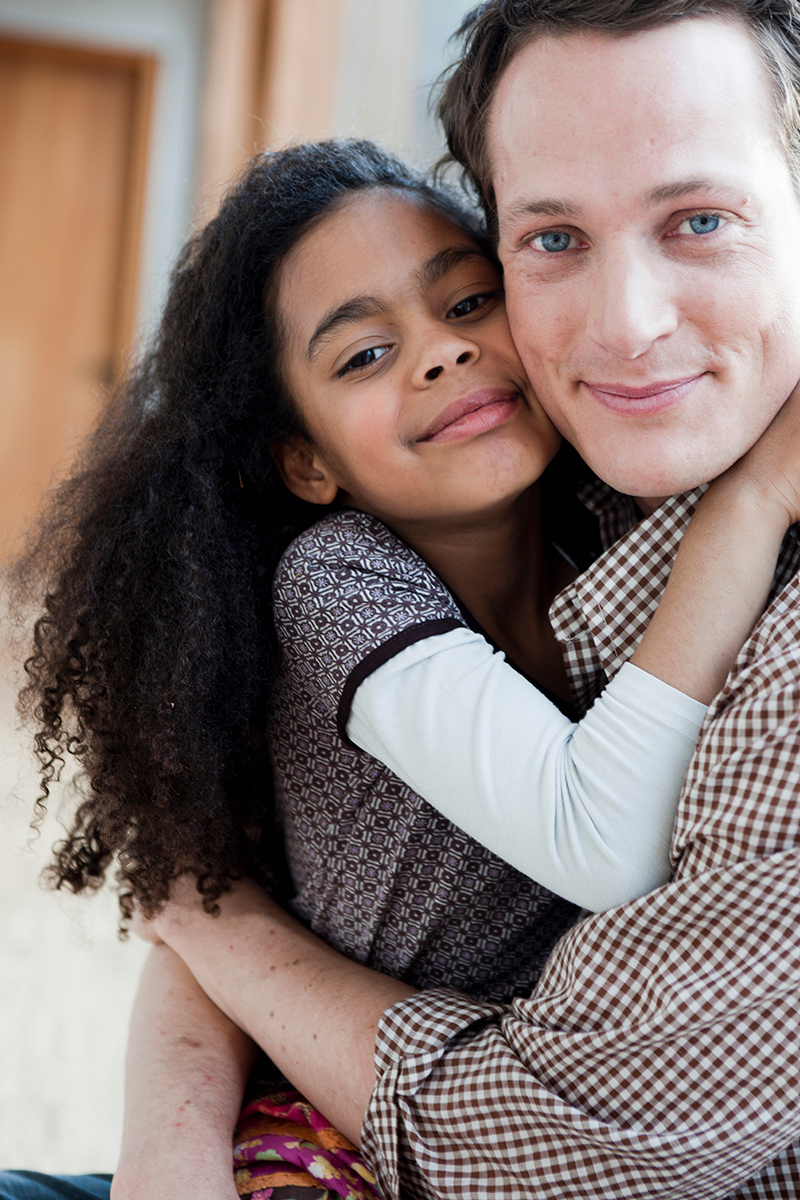
Feeling like you belong in the world is essential for developing healthy self-love, self-confidence, and self-esteem as you grow up. If you don’t feel like you belong, then you search for something or some group where you can belong.
There is a body of theory on attachment styles and related topics; however, this article does not engage with those theories. This article is about sense and looking at the bigger picture. You’ll want to read this article in its entirety to really understand the world.
WHAT IS ATTACHMENT
To explain attachment, we don’t need to focus on the human being. All mammals want to be securely attached to their parent. The parent raises and guides the child as the child grows into adulthood. This parent represents the child’s existence and the only thing the child knows. Everything the child learns is from this mammal. A child can attach to a parent who they feel loves them as they are (unconditionally) and guides them as they experience the world within their sovereign being. A child can always depend on such a parent and will feel as if they have their back. This applies to all mammals with a parent-child relationship. More on this later.
If you grow up in an abusive or neglectful household, you are not able to connect to your parent because they are busy worrying about themselves and their image, and gossip about you if you veer from their control. You take on a role that no child is supposed to carry, and may become the emotional parent. To make things worse, you receive conditional love where you must perform for crumbs of love. This leads you to seek attachment elsewhere.
ATTACHMENT OUTCOMES
As a human in the human world, attachment is necessary. Otherwise, you will be isolated and die. So what are some alternative attachment options? Food. If you attach to food, you become obese. Drugs, if you attach to drugs, you become a drug addict. Alcohol, if you attach to alcohol, you become an alcoholic. Other people, if the first person who shows you care and attention (most likely a facade) is a man, you will attach to that person regardless of sex. This is how men become gay and women lesbian. Transexuals, if you attach to someone who is a tranny, and you want to prove your love to them, you will also become a tranny.
The different industries that serve these variations of attachment with patch fixes should now make more sense. The root cause is the lack of attachment to the parent who was supposed to guide the child to become a productive member of society. Therefore, to fix the cause from the source, the adult must reparent themselves and heal their childhood wounds.
Meanwhile, with minimal, if any, guidance from the parent who is off doing who knows what, the child has unlimited options to create another industry based on what it finally attaches to. If their child becomes successful by luck, they will take credit for it by bragging about their genes. But look at all the horrible possibilities of a child attaching to something that can make it go awry. Once that happens, the mentally ill parent wants to say I told you so and possibly disown them. The fault lies with the parent, of course, but their illness overlooks this and still sustains their illusion of being perfect.
ATTACHMENT EXAMPLE
Let’s go back to the parent-child attachment, which applies to all mammals. Most humans get pets for unconditional love and companionship. As a pet owner, you become the parent of that pet, and the prior text suggests that they need to attach to you. I have two cats because I love independence, and cats are amazing to me. I love my cats and always have. When I discovered these things while doing critical thinking about attachment styles during my healing journey, and realized that dogs trained to fight are abused, I put my thoughts to the test. Rather than go and pet my cats every now and then when feeding them. I made it a point to attach to them. So I go in, pet them differently, and make sure they know I’m there for them, etc.
This transformed the relationship with my cats as they now act like dogs, wanting my attention and affection at odd times. I have a male and a female, and the female is the scaredy cat. Her attachment and confidence have grown significantly. Today, she is not scared when I come into the room and waits for me at her petting spot. Even when I went into the room with a vacuum, she stood there, trusting that I would not do anything to harm her. You can literally feel the trust she has for me since I started ensuring I attached to them. Every now and then, she’ll do her scared thing, but her confidence has skyrocketed. It is amazing to watch for me since I’ve seen her grow up and be scared the entire time.
These are the effects of attachment on the person. If there is no attachment, it is practically a toss-up as to what the individual attaches to. Your life and its success are reduced to a coin flip. Being securely attached, however, can lead to an amazing life where you feel like you belong, which can transform your self-esteem and self-confidence. Evidenced by my scaredy cat.
MY LACK OF ATTACHMENT
For myself, my mother was mentally ill, and it was impossible to attach to her. Thinking about it, she never sat down to speak to me as a child or listened to my concerns. As a child, I had passive suicidal ideations of hoping and praying to die, and ran away from home a few times.
It was so horrible that when I learned about attachment over the age of 40, I asked her what she had ever done for me that was just because I was me. She responded something to the effect of, “That’s not how I do things.” Whatever the response, it was an epic fail of the unconditional love a child deserves. Up until the age of 40, and even to this day, she could not think of one thing she had done for me just because she adored me.
CONCLUSION
This is what a majority of people experience when growing up in an abusive and neglectful household. These experiences wound the child and leave them functioning as a half-person in adulthood. The attachment to another human being, preferably a parent or caregiver, is essential for developing healthy self-esteem, self-respect, self-love, and self-confidence.



1 Comment
[…] not attach to their parent or caregiver, they find something to attach to. Check out the article on secure and insecure attachment to learn more about this phenomenon. The obese person is someone who attaches to food as an outlet […]